
Resources / Permit guide
HOUSTON PERMITS, HANDLED
Houston Sign Permits: What You Need to Know
Most commercial signs in the Houston area require a permit, and getting it wrong can mean fines, a red-tagged sign, or a costly do-over.
THE SHORT VERSION
Most commercial signs in the Houston area require a permit, and getting it wrong can mean fines, a red-tagged sign, or a costly do-over. The rules also vary more here than in most cities, because Houston has no traditional zoning and relies heavily on deed restrictions and landlord criteria alongside city sign code. This guide explains, in plain English, when you need a sign permit, what the process involves, and how the requirements differ across the region, plus how we take the whole thing off your plate.
THE SHORT ANSWERS
- NEED A PERMIT?
- Most exterior signs, yes
- ILLUMINATED?
- Adds an electrical permit
- WHO HANDLES IT
- We do, start to finish
- BIGGEST VARIABLE
- Jurisdiction review time
- WATCH FOR
- Deed restrictions & landlord criteria
THE PERMIT GUIDE
Do you need a sign permit in Houston?
Houston has no conventional zoning, so sign rules come from city code, deed restrictions, and landlord criteria at once.
In most cases, yes. Permanent exterior commercial signs (channel letters, monuments, pylons, wall signs, and cabinets) generally require a sign permit, and any illuminated sign also requires an electrical permit. Some small or temporary signs are exempt, and interior signs usually don’t need a sign permit (though ADA and building-code rules still apply). Because exemptions are narrow and vary by jurisdiction, the safe assumption is that your commercial sign needs a permit, and building without one risks fines and removal.
How Houston's lack of zoning changes things
Houston is famous for having no conventional zoning, which surprises people who expect a single citywide rulebook. Instead, sign rules come from a combination of the City of Houston sign code, private deed restrictions recorded on the property, and landlord or property-owner sign criteria. Deed restrictions and landlord criteria are enforced separately from the city and are often stricter, limiting sign size, height, type, or illumination. That’s why checking your specific property’s restrictions is as important as checking city code.
City of Houston vs. the suburbs
The City of Houston has its own sign ordinance and permitting process. Step outside the city limits, though, and you’re dealing with a different set of rules: unincorporated Harris County, municipal utility districts (MUDs), and incorporated suburbs like Katy, Sugar Land, The Woodlands, Pearland, and Spring each set their own sign codes, height and setback limits, and permit procedures. Master-planned communities add design-review committees on top. Knowing which rules apply to your exact address is the first step in any project.
What the permit process involves
A typical sign permit application requires scaled drawings of the sign, a site plan showing its location and setbacks, and, for freestanding or large signs, engineer-sealed structural drawings. Illuminated signs need electrical details and must be UL-listed. The reviewer checks the sign against size, height, area, and setback limits, and against any deed restrictions or landlord approvals, before issuing the permit. After installation, an inspection confirms the sign was built as permitted.
How long does sign permitting take?
Timelines vary by jurisdiction and sign type. A straightforward wall-sign permit can move relatively quickly; engineered freestanding signs and electronic message centers take longer because of the added structural and code review. Permitting is usually the single biggest variable in a sign project’s schedule, which is exactly why handing it to a company that knows the local reviewers keeps it moving.
Permit requirements by sign type
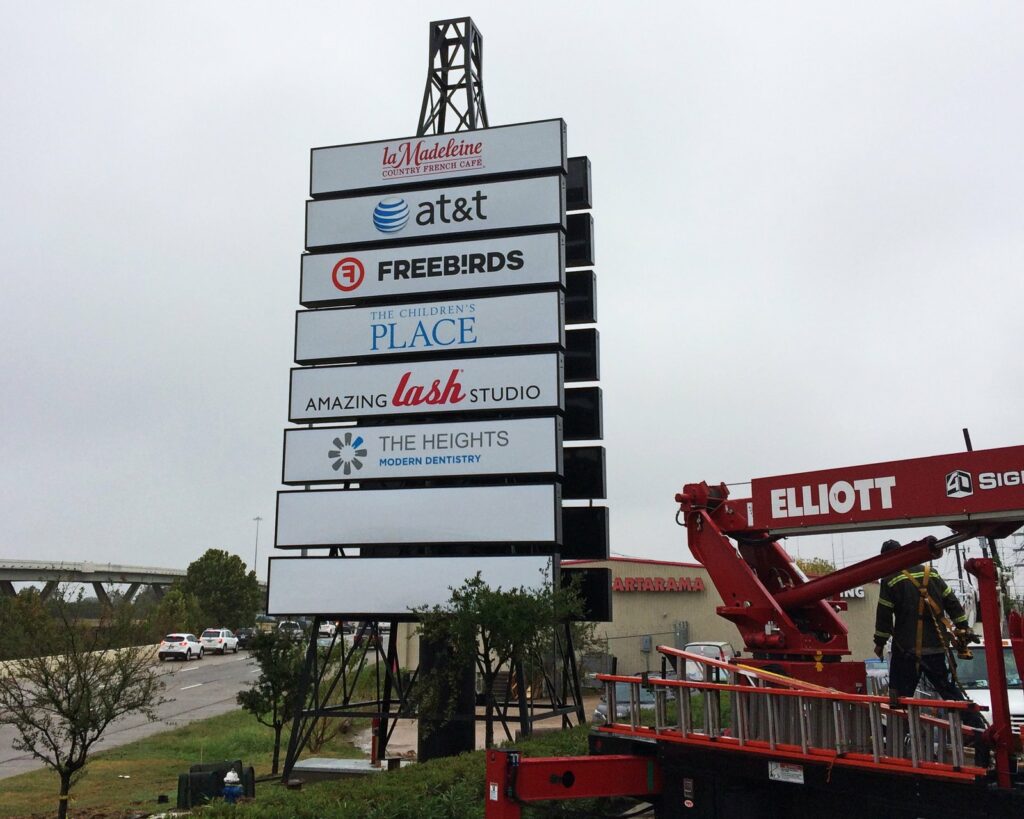
Different signs trigger different reviews. Wall and channel-letter signs need a sign permit and, if illuminated, an electrical permit. Monuments and pylons add structural review and engineer-sealed drawings because they’re freestanding and must handle wind load. Electronic message centers face the strictest rules: many jurisdictions regulate their brightness, location, and how often the message can change. Temporary signs and banners often have their own short-term permits and time limits. We identify exactly which permits your specific sign requires before we start.
The electrical permit for illuminated signs
Any sign that lights up is an electrical sign, and that carries its own requirements: the sign must use UL-listed components, be wired and grounded to code, and typically be connected on a dedicated circuit with a proper disconnect. As a licensed, bonded Texas electrical sign contractor, we pull the electrical permit and do this work correctly, which is what lets the sign pass inspection and stay safe for years. It’s also the part unqualified installers most often get wrong.
Common reasons sign permits get rejected
Most permit rejections come down to a handful of avoidable issues:
- Exceeding size, height, or area limits for the jurisdiction or zoning district.
- Setback or location problems — too close to a property line, right-of-way, or another sign.
- Missing engineering on a freestanding or large sign.
- Conflicts with deed restrictions or landlord criteria that weren’t checked first.
- Incomplete drawings — no site plan, electrical details, or dimensions the reviewer needs.
When can you skip a permit?
Genuinely exempt signs are limited: typically certain small, non-illuminated, or interior signs, and some temporary signage within strict size and time limits. The rules differ by jurisdiction, and the exemptions are narrower than most people assume. Rather than guess and risk a fine or removal, we confirm whether your sign qualifies for an exemption; if it doesn’t, we handle the permit so you’re covered.
WE TAKE IT FROM HERE
How 4D SignWorx handles permitting for you
Permitting is one of the most frustrating parts of a sign project when you do it yourself, so we make it our job. We check the city or jurisdiction code, the deed restrictions, and the landlord criteria for your exact address before we finalize the design, so what we draw is what you can actually build. Then we prepare the drawings the way each reviewer wants them, submit and manage the application, and see it through to final inspection. You get a compliant sign without chasing paperwork.

STRAIGHT ANSWERS
Frequently asked questions
Do I need a permit for a sign in Houston?
Most permanent exterior commercial signs require a sign permit, and illuminated signs also require an electrical permit. Requirements vary by jurisdiction, so the safe assumption is yes, and we confirm and handle it for you.
Does Houston have sign zoning?
Not in the conventional sense. Houston has no traditional zoning. Sign rules come from the city sign code plus private deed restrictions and landlord criteria, which are enforced separately and are often stricter.
What happens if I install a sign without a permit?
You risk fines, a red-tag or removal order, and having to redo the work. It’s far cheaper to permit correctly the first time, which we handle as part of the project.
Who pulls the sign permit, me or the sign company?
We do. Preparing drawings, submitting, and managing the permit through inspection is part of every 4D SignWorx project.
Do interior signs need a permit?
Usually not a sign permit, though ADA and building-code requirements still apply. We build interior and ADA signage to code.
How do I find my property's deed restrictions?
They’re recorded against the property and often held by the landlord or HOA. We help identify and check the applicable restrictions and landlord criteria before designing your sign.
Do electronic message centers have special permit rules?
Yes. EMCs face the strictest review, with many jurisdictions regulating brightness, location, and how often the message can change. We configure and permit them to local code.
Why did my sign permit get rejected?
Usually because the sign exceeded size/height/setback limits, lacked required engineering, conflicted with deed restrictions or landlord criteria, or had incomplete drawings. We prevent these by checking code and preparing complete submittals up front.
More straight answers.
The guides Houston sign buyers use most, written by the shop that builds the signs.
Trusted on five-figure projects, then trusted again.










Let us handle the permit for you.
Tell us about the project and a project manager will follow up, usually the same business day, with next steps and a free quote.
START A PROJECT
Tell us what you're building.
Send the details and a project manager will follow up, usually the same business day, with next steps and a free quote.
CALL THE SHOP
VISIT
2022 Pech Rd, Houston, TX 77055
HOURS
Mon–Fri · 8:00 AM – 5:00 PM
"*" indicates required fields