
You can use this checklist to get your City of Houston sign permit application organized in about five minutes. That doesn’t mean the City will review or approve a permit in five minutes. Review time depends on the sign, the completeness of your plans, and any corrections the City requests.
Getting the paperwork ready before you apply can help prevent avoidable delays. Use the steps below to identify the right permit route, gather the information reviewers need, and understand what happens after you submit.
Important: This guide covers signs within the City of Houston’s permitting jurisdiction. Houston-area suburbs and unincorporated areas may follow different rules. Confirm which authority applies to your exact address before starting.
First, does your sign need a City of Houston permit?
In general, the City requires permits before covered signs are erected, altered, or repaired. The City’s Sign Administration page explains its permitting and inspection responsibilities and links to forms and sign-code resources.
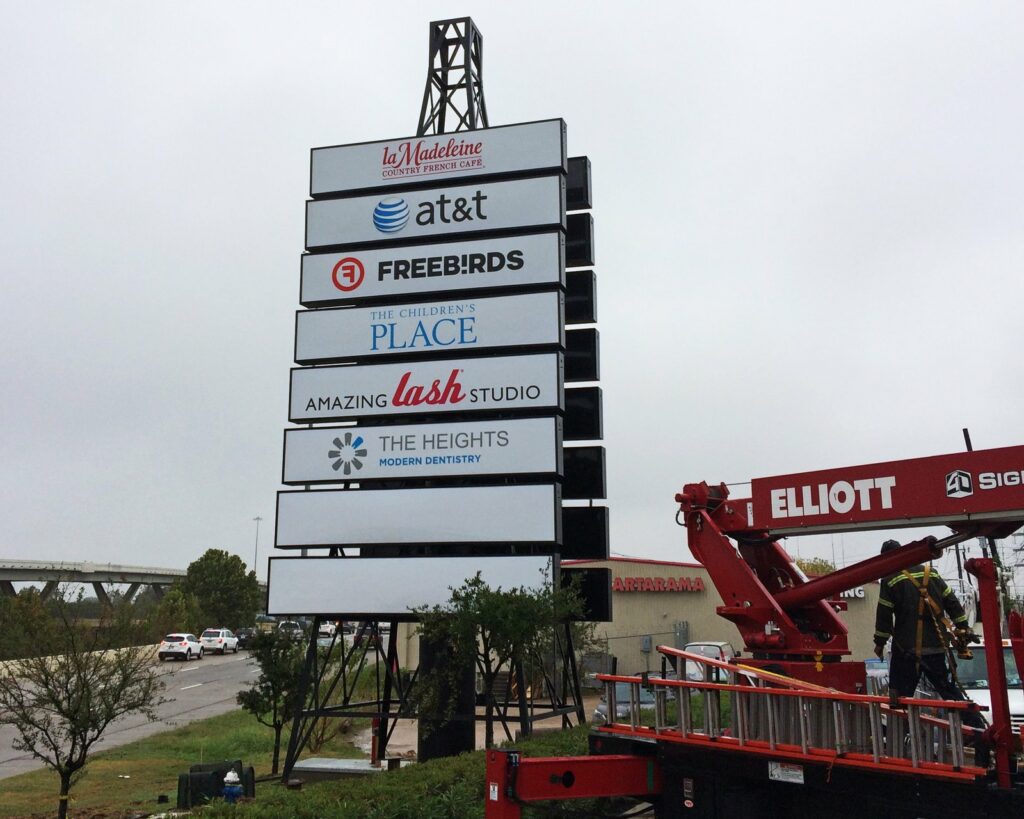
Most permanent commercial exterior signs (such as wall signs, channel letters, monuments, and pylons) should be treated as permit-required until the applicable authority confirms otherwise. Illumination can also bring electrical requirements and inspections into the project.
There are limited exceptions to the contractor licensing rules for certain non-electrical signs installed by a business owner. Those exceptions have specific conditions; they do not mean every small or non-illuminated sign is exempt from permits. Check the current rules rather than assuming your sign qualifies.
Houston’s sign requirements also depend on more than the sign itself. Street category, location, property restrictions, landlord criteria, and other site conditions may affect what can be approved. For a broader overview of those considerations, see the 4D SignWorx Houston sign permit guide.
The five-minute preparation checklist
Before opening the application, collect the items below. Some projects require additional documents, so use the City’s current application and plan-review instructions as the final authority.
1. Confirm the address and permitting jurisdiction
Write down the complete project address, including suite number and ZIP code. Then confirm whether the site is within the City of Houston’s sign-permitting area. A Houston mailing address alone does not establish which jurisdiction controls the property.
If the property is outside the City’s jurisdiction, contact the applicable city, county, or other permitting authority. Nearby communities can have different sign codes, limits, application forms, and review processes.
2. Identify the sign and its message
List each proposed sign separately. For every sign, note:
- Sign type and proposed location
- Overall dimensions and sign area
- Height above grade, where applicable
- The exact wording, logo, or message
- Whether the sign is illuminated, digital, or changeable-message
- Whether it is new, being relocated, altered, or repaired
A precise sign schedule helps the reviewer understand what you are proposing. If a project includes multiple signs, don’t rely on a general description such as “storefront signage.” Provide enough detail to identify each sign and its message.
3. Gather the owner and tenant information
Prepare the property owner’s information and the name of the business or tenant associated with the sign. If you are a tenant, check whether you need written authorization from the owner or property manager before filing.
The City’s application materials may require authorizations or affidavits. You may also need to confirm that the sign complies with applicable deed restrictions, landlord criteria, and other property requirements. These private approvals are separate from City review, so a City permit alone may not settle every property-level approval.
4. Prepare a site plan or location information
The application needs to show where the sign will go. The City’s Sign Administration guidance says a proposed location may be marked or staked on the property or shown on a site plan with dimensions from fixed objects. A survey is required for a new ground sign.
Before preparing the drawing, make sure the location is clear and measurable. Check that the sign is on private property and consider nearby property lines, driveways, streets, utilities, hydrants, and other signs. Site conditions can affect whether a proposed location is acceptable.
5. Assemble sign drawings and engineering, if required
Provide drawings and descriptive information that show how the sign is designed and where it will be installed. Depending on the project, plans may need dimensions, elevations, attachment details, materials, lighting details, and structural information.
Freestanding signs and larger or taller signs can trigger additional engineering requirements. The City’s plan review prerequisites and Houston Sign Code are useful references for confirming what applies to your project. Don’t assume that an old drawing or a rendering without construction details is sufficient.
For a new ground sign, plan for the required survey and any applicable structural documents. The sign’s foundation and attachment method can also affect construction inspections.
6. Check the site for clearance and visibility concerns
The City’s site-inspection guidance calls out several location conditions that can affect approval. Among other things, the sign must be wholly on private property, must not create a traffic hazard, and must meet applicable visibility and clearance requirements.
The City lists considerations including:
- Whether the sign location conflicts with a 45-foot visibility triangle
- Whether it obstructs the view of oncoming traffic for at least 250 feet
- Maintaining at least three feet from a fire hydrant
- Marking underground utilities
- Maintaining required clearance from overhead power or communication lines
- Compliance with sign-count and sign-classification rules
These are not a substitute for checking the code for your particular project. They are a reminder to review the site before finalizing a sign location or submitting plans.
7. Include electrical and special sign details
If the sign is illuminated, include the relevant electrical information and confirm which electrical permit and inspections apply. The City requires a shop inspection for electrical signs before installation. After the sign is energized, a final electrical or installation inspection is required, followed by the final sign construction inspection after electrical approval.
Changeable-message or high-technology signs may have additional requirements. Confirm whether a special acknowledgment or other documentation is needed before submitting. If your project involves illuminated channel letter signs or other electric signs, plan for electrical review as part of the project, not as an afterthought.
How to submit a City of Houston sign permit application
The City states that its sign application process is completed online. Start with the current resources on the Sign Administration page, including the on-premise sign permit application and the applicable plan-review instructions.
The process generally involves completing the application, submitting the required plans and supporting documents, paying the fees, and responding to review comments. Follow the City’s directions for online submission and plan uploads. If the reviewer requests corrections, update the plans and resubmit the requested information.
Do not install the sign before the required permit is issued. The City says permits must be obtained before covered signs are erected, altered, or repaired. A permit application in progress is not the same as an approved permit.
What happens after you submit?
The City reviews the application and plans for compliance with the sign code. Reviewers may ask for revisions, additional details, or supporting documents. Responding clearly and completely can help keep the application moving.
Fees depend on the project. The City says most fees are based on sign size and calculated during plan review; remaining construction, electrical, and operating fees are charged following approval of the site inspection and permit application. Check the current application system for the amounts applicable to your project.
Inspections depend on the sign and how it is built. The City requires a construction inspection in certain cases, including some drilled footings, signs using rebar or anchor bolts, and new engineered ground signs. Electrical signs require the applicable shop and final electrical inspections. The final sign inspection checks that the installation is safe and workmanlike and follows the approved plans and applicable code.
The City says inspections other than the site inspection must be scheduled by 4 p.m. the day before. Confirm current scheduling instructions when arranging an inspection, since the project’s specific permit requirements determine which inspections apply.

Common reasons a sign permit application needs corrections
A few preparation steps can help prevent common problems:
- Incomplete sign details: Missing dimensions, sign messages, or information about illumination can make it difficult to review the proposal.
- Unclear site location: A site plan should show the proposed sign in relation to fixed objects and relevant site features.
- Missing engineering or survey information: Ground signs and projects with structural requirements may need additional documentation.
- Unresolved property approvals: Deed restrictions, landlord rules, and owner authorization may apply separately from City requirements.
- Assuming the wrong jurisdiction: A project near Houston may fall under a different permitting authority.
- Installing before approval: Wait for the required permit and follow the approved plans.
For example, a ground-mounted monument sign may involve a survey and structural review that a straightforward wall sign does not. A sign’s type, size, location, and construction all shape the submittal.
Can you do it yourself, or should your sign contractor handle it?
The City issues sign permits to licensed sign contractors, with limited exceptions for certain qualifying non-electrical signs installed by the business owner. Because the exceptions are specific, check the City’s current rules before deciding who can submit or perform the work.
Even when a business owner can handle a particular permit, the application still needs accurate sign details and supporting documents. For an illuminated, engineered, or freestanding sign, coordinating drawings, electrical work, construction, and inspections can add complexity.
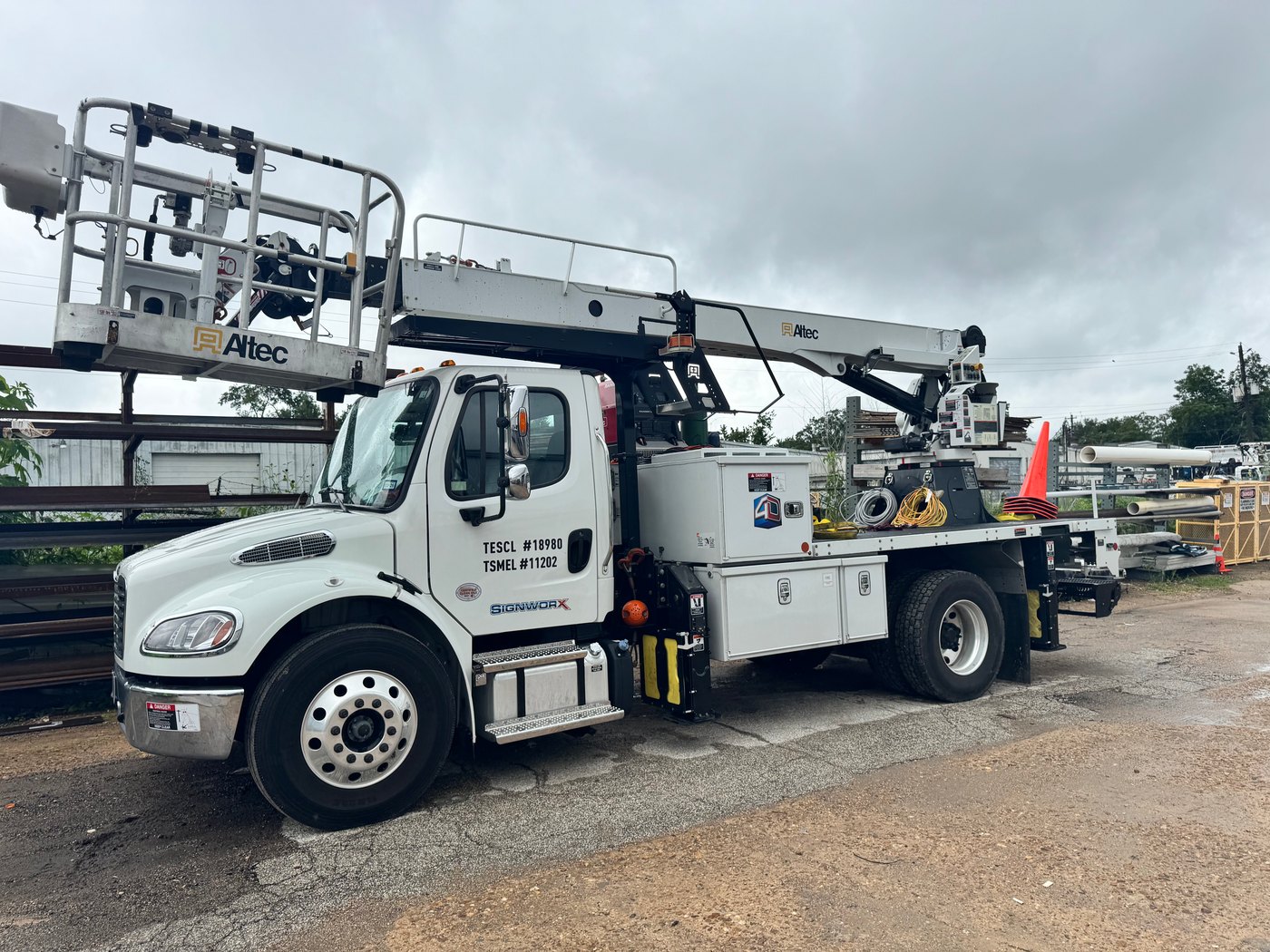
A turnkey sign contractor can coordinate those project steps and help keep the approved plans connected to fabrication and installation. 4D SignWorx handles sign projects from design and permitting through in-house fabrication and installation. Learn more about the turnkey sign process.
Your quick reference before you apply
Use this short list to check your preparation:
- Confirm the correct permitting jurisdiction for the property.
- Identify each sign, its dimensions, message, and lighting.
- Gather owner, tenant, and authorization information.
- Prepare site-location details; obtain a survey for a new ground sign.
- Include drawings and any required structural or electrical information.
- Review property restrictions and site clearance conditions.
- Submit through the City’s current online process.
- Wait for permit approval before installation.
- Complete all required inspections after the work.
The five-minute checklist is a fast way to get organized, not a promise of five-minute approval. Complete, accurate documents can reduce avoidable back-and-forth, but review timelines and requirements vary by project.
If you want a team to coordinate the sign, drawings, permitting, fabrication, and installation, contact 4D SignWorx to discuss your Houston project. We’ve built signs in Houston since 1968 and handle projects in-house from the first design through installation.