Choosing between a monument sign and a pylon sign comes down to how people approach your property, how much information your sign needs to carry, and what local rules allow. A monument sign can make an entrance feel established and easy to recognize. A pylon sign can lift your name and tenant listings above traffic and other visual obstacles.
For commercial property owners, developers, and apartment communities across Texas, the right choice is not simply the taller or more impressive option. It is the sign that fits the site, supports your tenants or residents, and can be approved, built, and maintained for the long term.
What is the difference between a monument sign and a pylon sign?
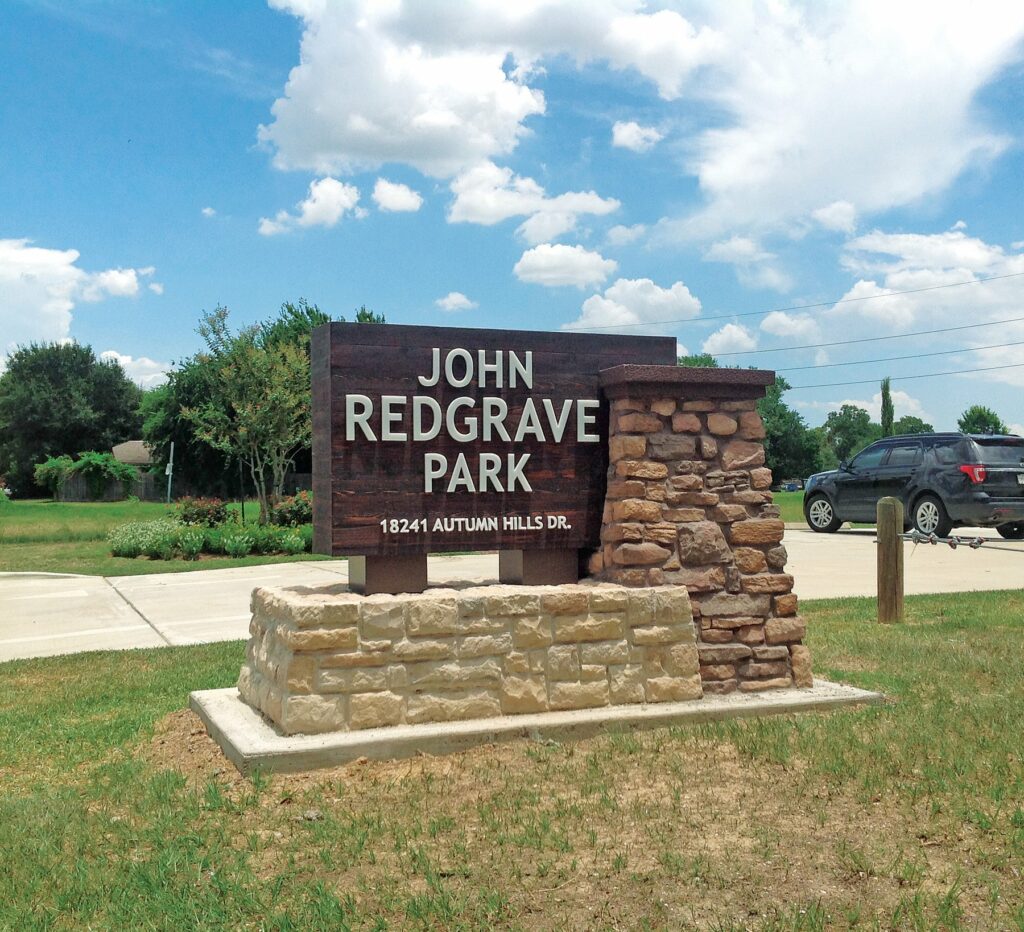
A monument sign is a freestanding sign installed close to the ground, often with a masonry, stone, metal, or architectural base. Its lower profile gives it a substantial, integrated appearance that works well at property entrances.
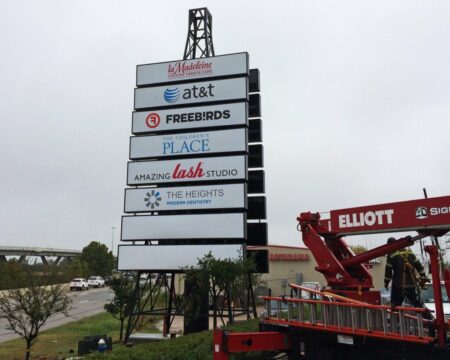
A pylon sign is elevated on one or more structural supports. Its height helps drivers see the sign from farther away, especially on busy roads or sites set back from the street. Pylons often include stacked tenant panels.
Both types can be illuminated, built with changeable faces, and designed to reflect a property's architecture. The main difference is how high the sign sits, and what that height means for visibility, design, engineering, and approvals.
When a monument sign is the better choice
A monument sign is often a strong fit when your property needs a clear, grounded identity rather than a long-range roadside landmark.
Consider one for:
- An apartment community or residential development entrance
- An office park, medical campus, or church
- A shopping center where a lower-profile sign fits the property’s design
- A single business or property with only a few names to display
- A site where nearby homes or neighborhood character make a tall sign less suitable
The lower structure can complement brick, stone, landscaping, and building materials. It can also make a welcoming first impression for people entering a community or campus. For apartment communities, a well-placed monument can identify the property at the driveway while keeping the overall scale in line with the surrounding buildings.
But that lower profile has a practical trade-off: it may be harder to see over parked vehicles, mature landscaping, a berm, or traffic. A site that looks open on a plan can feel different from a driver’s perspective. Check sightlines from each approach before settling on a design.
For more examples and details about materials, lighting, and engineering, explore custom monument signs in Houston.

When a pylon sign is the better choice
A pylon is worth considering when a property needs to be recognized from a greater distance or must present multiple tenants to passing traffic.
It may suit:
- Shopping centers and retail strips
- Multi-tenant office or mixed-use properties
- Businesses set back from a busy road
- Sites with trees, buildings, parking, or other features that block a ground-level sign
- Properties where drivers need to identify the entrance before reaching the turn
Height can improve visibility, but it does not guarantee readability. A sign seen from farther away needs a simple message, strong contrast, and lettering sized for the viewing distance. Packing a tall sign with too many tenant names or small details can make it difficult to read while driving.
Pylons also usually require a more substantial support structure and foundation than a lower ground sign. The design must account for the site, sign dimensions, materials, wind loads, electrical components, and maintenance access. Learn more about pylon and pole signs and how they are designed for roadway visibility.
Quick comparison
| Consideration | Monument sign | Pylon sign |
|---|---|---|
| Profile | Low, close to grade | Elevated on structural supports |
| Best-known advantage | Architectural presence at an entrance | Visibility over distance and obstacles |
| Common applications | Communities, campuses, offices, and property entrances | Shopping centers, multi-tenant sites, and road-facing businesses |
| Tenant capacity | Often suited to a property name or a limited directory | Often suited to a larger stack of tenant panels |
| Design effect | Grounded and integrated with landscaping | Taller and more prominent from the road |
| Site considerations | Must remain visible above landscaping and vehicles | Needs space, structural planning, and careful placement |
| Approvals | Vary by local rules and property restrictions | Vary by local rules and may involve additional structural review |
This is a practical comparison, not a substitute for checking the requirements for your specific address. Sign regulations differ across Texas cities and jurisdictions.
How to choose for your property
1. Check the driver’s view, not just the site plan
Stand where drivers will approach from, or review the location from a vehicle. Look at the sign area in both directions and at different times of day. Consider road speed, curves, elevation changes, parked cars, trees, utility poles, and planned landscaping.
Ask a simple question: can a visitor spot the sign soon enough to understand what it identifies and make the turn safely? If not, a pylon may be appropriate. If the site is easy to see and traffic moves more slowly, a monument may do the job.
2. Match the sign to the number of names
A single property name needs less sign area than a center with many businesses. For a multi-tenant property, decide how the property name, anchor tenants, smaller tenants, and visitor information should fit together.
A pylon can offer more room for stacked panels, while multi tenant monument signs can work where a lower-profile directory suits the site and the rules permit enough area for clear tenant identification. In either case, plan for future leasing changes. Standardized, replaceable panels make it easier to update listings without rebuilding the whole sign.
A coordinated multi-tenant sign program can define panel sizes, visual hierarchy, materials, and how tenant updates will be handled. That helps protect the property’s overall appearance as occupants change.
3. Consider what the sign should say about the property
Signage is part of the arrival experience. A monument may better reinforce a residential community, professional campus, or property with a strong architectural identity. A pylon may better serve a retail destination where drivers need to identify the center and its tenants quickly.
The two options are not always mutually exclusive. A large property might use a pylon at its main road frontage and monument signs at secondary entrances. A shopping center may combine a pylon for roadside visibility with lower signs that help visitors identify individual drives or buildings. The right combination depends on the site and the permitted sign program.

4. Look beyond the initial build
The installed sign is only one part of the long-term cost. Consider the materials and finishes, illumination, electrical components, access for service, and the effort required to update tenant panels. A taller structure may involve more steel, foundation work, and installation planning. A masonry monument may require more finish coordination or landscaping.
There is no reliable one-size-fits-all price comparison. Size, materials, lighting, site conditions, engineering, permits, and access all affect a project. A site review and a defined scope are the best way to compare options fairly.
5. Confirm local rules before finalizing the design
Texas does not have one statewide height or size limit that applies to every commercial sign. Requirements depend on the municipality or other authority responsible for the location, as well as property-specific restrictions. Houston, for example, has no conventional zoning, but city sign requirements, deed restrictions, and landlord or property-owner criteria may all affect a project.
Before design is locked in, check the rules that apply to your exact property. Depending on the location and sign, review may cover sign height and area, setbacks, placement, illumination, electrical work, structural drawings, and the number or spacing of freestanding signs. Properties near major highways may also need additional review. TxDOT provides information on commercial signs along regulated highways.
A sign that appears feasible from a design perspective may need changes to meet local requirements. A permit review early in planning can help reduce redesign, delays, and surprises. See the Houston sign permit guide for an overview of local permitting considerations.
What about shopping centers and apartment communities?
For a shopping center, the main challenge is balancing property identity with tenant visibility. The sign should help drivers recognize the center, then make it easy to find the businesses they are looking for. A pylon may be the primary road-facing sign, while monuments and wayfinding signs can support entrances and circulation across the property. See how those pieces can work together in shopping center signage.
For an apartment community, a monument is often a natural starting point at the main entrance. It can show the community name and establish a clear arrival point. A pylon may be appropriate if the property sits far back from the road or needs to be seen above surrounding obstructions. In either case, allow for landscaping to grow without obscuring the sign, and consider how visitors will find leasing, resident, and service entrances.
The right answer starts with the site
Choose a monument when a ground-level sign fits the property’s character and gives visitors enough visibility. Consider a pylon when distance, road speed, tenant listings, or obstructions call for a higher sightline. For larger developments, a coordinated combination may work better than relying on a single sign type.
A good decision weighs visibility, tenant needs, design, maintenance, and local rules together. 4D SignWorx designs, engineers, fabricates, and installs signs in-house, including permitting and final installation. To discuss the right approach for your property, request a project quote.